At just 13 years old, Jane Akinyi should have been worrying about homework, playing with friends, and dreaming about her future. Instead, she found herself fighting for survival as a child, a mother, and a victim of gender-based violence.
Jane was raised by her elderly grandmother at Kabibi Beach after losing both of her parents. Life was extremely difficult. Poverty had taken hold of their household, and on most days they survived on only one meal. Going to school was a daily struggle. Jane often relied on classmates to share sanitary pads because her family could not afford them. Many times, she missed lessons to work on farms or help her grandmother sell fish so they could earn enough to eat.
As her grandmother's health deteriorated due to old age and illness, Jane found herself carrying responsibilities far beyond her years. She struggled to balance caring for her sick grandmother, earning an income, and attending school. The burden became overwhelming.
Then her life took a devastating turn.
One day, her grandmother told her that their suffering could end if she agreed to be in a relationship with a boda boda rider who frequently visited their home. The man had been bringing the family one kilogram of sugar every week, and her grandmother believed he was their only hope of escaping poverty.
"I refused many times," Jane recalls. "But my grandmother kept insisting that this was the only solution."
Whenever Jane resisted, she was punished. Her grandmother would lock her out of the house at night, forcing the young girl to sleep outside in the cold. The emotional pressure became unbearable. Feeling she had no other choice, Jane eventually gave in.
The boda boda rider began taking her to his house every evening before returning her home the following morning so she could continue caring for her grandmother.
Only a few weeks later, Jane discovered she was pregnant.
Instead of receiving support, she was met with violence.
The man demanded that she terminate the pregnancy. Terrified, Jane refused. She had witnessed another young woman lose her life during an unsafe abortion and feared the same fate.
Her refusal marked the beginning of relentless abuse.
"He would beat me, throw me outside into the cold, and stop providing the little support he had been giving us."
As Jane endured the violence, tragedy struck again. Her grandmother's condition worsened, and she passed away, leaving Jane completely alone.
At only thirteen years old, she was pregnant, homeless in all but name, grieving the loss of her only caregiver, and carrying the weight of the world on her shoulders.
Nine months later, Jane gave birth to twins.
What should have been a joyful moment instead became another struggle for survival. Forced to drop out of school in Class Six, she had no education, no income, and two babies depending entirely on her.
"There were days I didn't know where our next meal would come from. I felt my future had ended before it had even begun."
Everything changed when Jane encountered the Health and Economic Development Strategy Organization (HEDSO) through its Economic Integration of Teenage Mothers Programme.
Recognizing her vulnerability and determination, HEDSO connected Jane with a caregiver who offered her a safe place to stay as she began rebuilding her life.
The organization enrolled her in vocational training, where she learned how to produce liquid soap. After completing the training, HEDSO linked her to a nearby health dispensary that became one of her first customers, purchasing the liquid soap she manufactured.
For the first time in years, Jane had a reliable source of income.
"The small profit I earned meant I could finally put food on the table for my children."
But HEDSO's support went far beyond livelihood training.
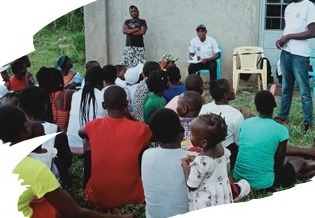
Jane was introduced to the Knit Her Future Girls Advocate Support Group, a network of teenage mothers who provided emotional support, mentorship, and encouragement. Within the group, she discovered she was not alone. She found sisters who understood her pain, celebrated her victories, and inspired her to dream again.
Together they shared experiences, learned life skills, rebuilt their confidence, and encouraged one another to pursue brighter futures.
Today, Jane's story is no longer defined by violence or poverty.
Her liquid soap business has continued to grow, enabling her to provide for her twins with dignity. More importantly, she has transformed from a vulnerable child survivor into a courageous advocate for girls' rights.
"I now stand tall and speak for girls who cannot speak for themselves. I want every girl to know that what happened to me should never happen to another child."
Jane's journey reminds us that behind every statistic on child marriage, teenage pregnancy, gender-based violence, and poverty is a child with dreams worth protecting. Her resilience demonstrates what becomes possible when vulnerable girls are met not with judgment, but with protection, opportunity, skills, and hope.
Through HEDSO's Economic Integration of Teenage Mothers Programme, Jane did more than rebuild her livelihood she reclaimed her future.
Today, she is raising her twins with hope, running a growing small business, and using her voice to ensure that other girls are protected from the cycle of abuse and exploitation that once threatened to define her life.
#weareHedso
#knit her future
